The Front Porch as a Place for Making Music
A front porch music gathering can feel welcoming with thoughtful seating, a considerate time and simple ways to join in or listen without pressure.
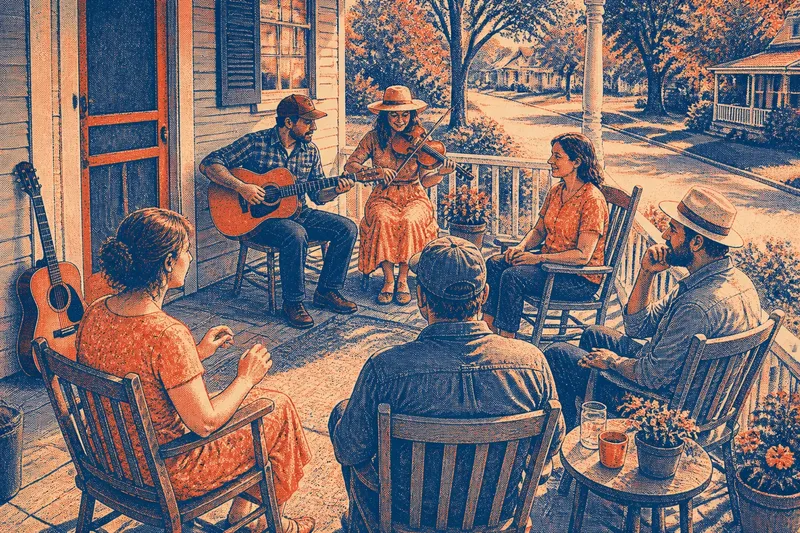
A guitar rests beside the screen door while someone taps a rhythm on a chair arm. A front porch music gathering can begin with little more than a few neighbours, a tune and room to listen.
Porches are open to birdsong, passing cars and the shape of the house itself, so sound will vary from one place to another. A few modest choices can help guests feel included without turning a relaxed afternoon into a performance.
Where should people sit on a front porch?
Before moving chairs, notice how the porch meets the yard and street. A broad step might work as a natural front row; a shaded corner might suit someone who wants to listen quietly. Try the arrangement and adjust it if people cannot see one another or hear comfortably. Keep the doorway and main route clear for arrivals.
A loose curve of chairs can make it easier to see a nod before a chorus or a hand raised to pass on a turn. Leave a space for anyone who prefers to stand.
Say you have a narrow porch and a few neighbours arriving with instruments. Place two chairs against the wall, leave the steps open and try seating the players near the centre. If conversation and music are hard to hear, move the chairs closer or change the players’ positions; if the space feels crowded, keep one side open for listeners to come and go.
What time suits the neighbourhood?
Outdoor music carries beyond the people who came to hear it. A daytime or early-evening gathering may fit nearby routines better than a late session, but the street and neighbours matter more than any general rule. A busy road can mask a quiet song; a still lane may carry it farther than expected.
Give guests a clear start and finish in the invitation, and let nearby neighbours know what you have in mind. “Drop by for a few songs after lunch” sets a friendlier expectation than an open-ended invitation.
If homes are close together, keep the group small and the volume conversational. The aim is to include the people present, not to make the music reach the whole block.
How can listeners feel welcome?
Some guests may bring a banjo, fiddle or harmonica. Others may arrive empty-handed and know only the chorus. Treat listening as a full part of the gathering, not as a waiting room before someone’s turn. A comfortable chair, a glass of water and room to watch can be invitations in their own right.
Choose tunes with room for people to join if they wish. A familiar refrain or repeated chorus can offer an easy opening. If a song is new to the group, its player can share the title or a little context, then let everyone listen without pressure to pick it up.
Ask, “Would you like to take the next one?” and accept a no without coaxing. That keeps the porch sociable rather than making every guest feel responsible for supplying a performance.
How should you arrange players for porch sound?
Wooden boards, brick walls, railings, trees and passing traffic can all affect what people hear. You might try having a player face the group, then ask whether listeners can hear comfortably. If the sound is unclear, shift chairs or try another position; a different porch or outdoor setting may call for a different arrangement.
There is no need to bring speakers for an informal acoustic gathering. They can change the feel of people making music together and may carry sound farther than intended. If a quiet singer is hard to hear, ask listeners to move closer or leave a pause between songs rather than asking the singer to push harder.
Wind and traffic will sometimes interrupt a tune. A pause can give someone time to close a gate, shift a chair or catch the words. Trying to compete with every outdoor sound can tire players and listeners alike.
What makes a simple musical start work?
A songbook, a short list of familiar tunes or a few printed lyrics can ease the first moments. Keep them optional. Guests may bring songs from family gatherings, church socials or local jam sessions, and the porch can make room for different traditions without asking anyone to explain them.
Start with something the host knows well, then invite suggestions. If two guests want to play different versions of the same tune, hear what each has in mind and let the group decide whether to enjoy both.
What is not worth the effort? A tightly timed programme, elaborate decorations or a complicated sign-up system. A clean place to sit, a few cups and permission to join in or simply listen are enough to get started.
What questions come up at a front porch music gathering?
What if nobody knows the same songs?
Invite each person to bring a tune they enjoy, then take turns sharing a verse or short instrumental passage. Listening together can be the common ground, even without a shared repertoire.
How can a guest join without an instrument?
They can listen, clap gently if the players welcome it, or join a chorus they recognise. Tell guests that participation is optional, so no one has to ask permission to sit quietly.
Should the host provide lyrics?
Lyrics can help with familiar songs, but they are not necessary for every tune. Put out a small stack of copies if the group expects to sing; otherwise, invite people to listen first.
What if the weather turns?
Decide in advance whether the group can move indoors, postpone or call off the gathering. Keep instruments away from damp conditions and follow each instrument’s care guidance if it gets wet.
A front porch music gathering works best when people can choose how to take part: playing, joining a chorus or listening quietly. Keep the invitation clear, then make one small seating or sound adjustment if the actual porch calls for it.